

Saturday, October 30, 2021

Friday, October 29, 2021
Are You a Conqueror?

Although I am no Alexander the Great, when I set out to New York
from Montreal to be a journalist over 25 years ago, I too was ready to conquer
the world. Like a military general with a pushpin cork board, I plotted who I
wanted to meet, often via ambush, along with the implementation strategies to
secure an interview. Today, with eyes ever wiser, enlightened by my continual
Torah study and some abrasive life experiences, I question why I even cared at
all.
What does it really mean to conquer? Historically speaking, both
the conquered and the conquerors now lie in the dust. Today, my cover stories
of famous people are more ancient and irrelevant than a Roman war chariot. For
in today’s speedy world, yesterday’s news dies and decomposes while still in the
telling. And yet so often, I look to the contents of my weekly Torah blogs from
prior years for ideas, and they by contradistinction are everlasting.
Despite 3333 years of enemies and toxic distractions, the Torah can never
be vanquished nor rendered obsolete, for it is the Tree of Life--and all who
cling to it shall live.
Click here to watch Aliza's YouTube video on
Chayei Sarah
And then I think about the spirit of conquest
that possesses most of us at some point in our lives, whether one wants to be
the richest, the best looking, the most fit, the most popular, or the most
famous. And I must ask the same question I have often asked my interviewees:
Have you paid a price for your success? And the answer is invariably, “Yes.”
As we aim to conquer the worlds we respectively
find ourselves in, more often than not, it is we who take the
beating. There is always a price to pay. A war of attrition is launched against
our values, our upbringing, our religion, our innocence, our idealism. We find
too often that we have conquered the better parts of ourselves to “make it” in
this world which the Zohar calls alma d'shikra, “the world of
illusion”— “the world of lies.” And because we buy into the lie and the fake
gods it glamorizes, our actions become deceitful, distorted and vulgar thus
distancing us from truth of the Torah and the word of Hashem.
Indeed, we are meant to be conquerors; but we
have misused our charge. We are tasked with conquering our evil inclinations
and animal impulses and appropriating them to the service of G-d, turning
darkness into light. Humans walk upright (unlike the four-legged
kingdom), because our purpose is to set our sights high and
transcend the mundane roads we travel and the kiosks of sin and materialism we
encounter along the way. The Almighty sends us continual tests which we can use
to refine us and to redefine us. No moment is
trivial. Every moment is a war. If a person doesn’t conquer the moment by
making the right choices, the moment conquers him both physically and
spiritually.
Each moment also offers us not only the
opportunity to avert wrongdoing, but also to do good. Instead of throwing coins
into a wishing well, give charity. Instead of putting your extra money into
another stock, give charity. The ultimate return is much greater.
Instead of watching a marathon of Netflix
episodes, watch a Torah video.
Instead of gossiping and complaining endlessly,
pray and bless.
Instead of being filled with anger and fuming
over what the world owes you, be loving and question when was the last time you
did something for someone else, especially when it was hard and inconvenient to
do so?
In this week’s Torah reading, we read about the
death of our matriarch, Sarah. It is written by the biblical commentator,
Rashi, that she was as free from sin at the age of 100 as she was at 20.
Although she was exposed to many challenges and problems in life, she never
used them as excuses to spiral downward in life. She was very beautiful and was
abducted by both a Pharaoh and a king. She escaped both situations unscathed.
Sarah was the conqueror, strong and certain in her service of G-d. Her tent was
literally aglow with her greatness and moral perfection.
The life of Abraham too serves as a perfect
paradigm of righteous behavior. G-d instructed him to arise and leave his place
of birth. But the Hebrew words Lech Lecha translate as “go to
yourself.” Indeed, upon the physical journey, there were practical challenges
to conquer, but they mirrored the internal journey and were all whetstones to
achieve spiritual perfection. He passed all his tests and rose to the occasions
instead of letting them bring him down. He conquered the world with the word of
G-d, with kindness and compassion and never compromised his beliefs.
How will you conduct yourself upon the road of life?
What will you jettison to reach your destination: dignity? honesty? integrity? How
will you affect the people who come across your path? How will you make this
world a better place because you were in it? In what way do you reflect an
aspect of G-d? What do you leave in your wake? Darkness or light? Hate or love?
Jealousy or generosity? Dispute or peace?
Change your battlefields my friends and you too
can walk on holy ground.
Do you want to be a conqueror?
Start with conquering yourself, and to the
victor go the spoils.
Please click here to subscribe to Aliza's YouTube Channel
Friday, October 22, 2021
Are You a Head Above the Rest?

By deductive reasoning, if I am better and more important than
you, then my problems and distresses are more important than yours. But that is
not the world God wanted. In fact, the Talmud teaches that before we petition
God for our own needs and wants, we must first pray for another. As we see in
this week’s parashah Vayeira, G-d granted Sarah a son after Abraham
prayed for Avimelech to be blessed with children.
There is no person more empty than an egoist, for God cannot
reside inside a full-of-himself arrogant person, and so He vacates the premises. To
improve ourselves and all humanity, we must get ourselves out of our own way.
You want to throw something on the sacrificial altar to get results (other than
scapegoats, i.e., your mother, your partner, your cousin, your sister, etc.),
start with the words, “me,” “myself” and I.
By further deduction we must recognize how very far away we are
from God and truth by looking to Moses as the paradigm of behavior. It was because he was the most humble person to walk the earth that he was worthy to be God’s unique
messenger: “ And there was no
other prophet who arose in Israel like Moses, whom the Lord knew face to face….” Thus, if God was so
close to Moses due to his humility and self-effacing behavior, imagine how bad
we look in God's eyes because of our selfishness. We are polar opposites.
Selfishness is an antithesis to the five senses with which God created and
blessed man, for it has no eyes for the suffering of its sister, has no ears
for the cries of its brother, it smells not its own stench, it has no parched
tongue to know another’s thirst and it has no heart to feel or hand to touch
another in comfort.
It is little wonder then that the world in which we find
ourselves is falling apart due to its fragmented nature wherein each person
thinks the world revolves around them instead of realizing that the whole world
depends upon them. There is an apropos rabbinic allegory about heaven and hell.
“In each location, the inhabitants are sitting at a long table but the utensils
are too unwieldy to serve oneself. In hell, the people keep trying to stuff
their own faces but can’t get the food into their mouths and so they starve. In
heaven, the people help each other and feed one another across the table and
are sated.”
In this week’s Torah reading, Vayeira, we read about the
destruction of Sodom and Gomorrah, societies where people cared only for
themselves and were heartless and callous towards others. Being charitable was
a crime. Their profound egotism and lust for easy gratification led, as it
always will, to self-destruction. As the Talmud says, “He who is affected by a
voracious hunger finally eats his own flesh.” Yes, man is made of earth which
is the most selfish of creations as it is surrounded by a gravitational field
that pulls everything toward itself. Yet even the earth is not so selfish that
it begrudges the flower and the tree to grow upward and the seedlings to
sprout. In the final analysis, the earth gives much more than it takes. Do we?
In the center of the biblical account of Sodom and Gomorrah
stands the Patriarch Abraham, who asks God to spare the city if even fifty
righteous people could be found. God said he would. Abraham slowly tweaks the
number down to ten in case fifty could not be found. God consents. Not even ten
could be found. But we learn here not only about the failings of Sodom and
Gomorrah, but also about Abraham’s, and Noah’s too. When God told Noah he was
going to destroy humanity, Noah didn’t say a peep, he just built an Ark. When
God told Abraham he would destroy Sodom and Gomorrah, Abraham’s best was to
suggest that God should spare the righteous. But, when God told Moses that he
was going to wipe out Israel because of the sin of the Golden Calf, Moses said,
“Please forgive their sin—but if not, then blot me out of the book you have
written.”
It is said that in the Messianic
Age everyone will be beset by intractable problems. As today’s crises escalate
personally and globally, we too cannot merely ask, “Will it be okay for me?” We
ARE our brother’s keepers. Like those in the allegory, we too each have a long
spoon in our hand with which we can “serve” another and the other can serve us.
On our own initiative let’s grow “longer arms” to give each other a helping
hand and not by contradistinction pickpocket each other of our dignity and humanity
by our mere self-absorption. If only ten righteous people could have been
found, Sodom and Gomorrah would not have been destroyed. The question to
ourselves is, “Would we count among them?”
(By the way, giraffes are kosher animals but we have lost the knowledge on how to slaughter them properly. So be a giraffe. Stick your neck out for someone else and be a head above the rest!) Shabbat Shalom

Friday, October 15, 2021
Who Are You?

Who
are you? Do you know? Are you the fancy car you drive? Are you the wealth you
amassed? Are you the title on your business card? Are you the designer clothes
you wear? The answers may seem simple, but they are not. If one by one all your
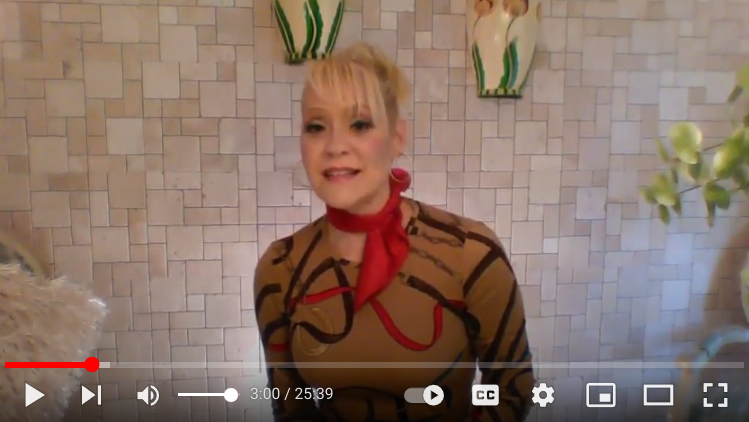
status symbols are taken away, when do you stop being you? Watch Aliza's video on Lech Lech on YouTube
When
Covid-19 compelled us to work remotely, obviating the need for business suits,
were we the same power players in our bathrobes and sweatpants? When we could
no longer enter those skyscrapers, our heels clacking against the marbled
floors affirming our worth, what happened to our prestige as we did business
from our homes with kids throwing Fruit Loops at each other in the background?
The pandemic certainly offered each of us ample opportunity and time to think
and to question, “Who am I?”
In this week’s Biblical reading, G-d
tells the Patriarch Abraham Lech Lecha which translates as “Go
to yourself.” The Almighty then gives him directions on how to get there: “Go
FROM your country, your birthplace and your father’s home.” G-d’s roadmap to
“self” seems odd. Aren’t the familiar backdrops such as country, birthplace and
home the very things that make up a person’s sense of self? Many of us in our
own lives return to the place we grew up in order to get in touch with who we
used to be. But G-d is telling Abraham the complete opposite here. If you want
to “go to yourself” and to know who you really are, then you need to unbury
yourself from all the fake things you’ve allowed to define you, including your
friends and your habits.
Make no mistake, Abraham’s journey was
not one to find G-d -- he was already aware of G-d’s omnipresence. Abraham had
to go find HIMSELF through the trials and tribulations of his journey on
foreign terrain. He had to discover whether the pressures he encountered along
the way would crush or corrupt him, or fortify him and show the measure of his
moral mettle.
Martin Luther King Jr. once said that the ultimate measure of a man
is not where he stands in moments of comfort and convenience, but where he
stands at times of challenge and controversy. When the checks are coming in and
the stock market is going up and all is good for us, it is easy to have faith
and believe in G-d. But when our circumstances change so dramatically that it
seems as though our environment has changed too, it is during that time of
upheaval and stress that we, like Abraham, must “go to ourselves” to access the
gifts of who we are and to substantiate our faith in G-d, the very One Who has
put us upon a fortifying road. Will we walk it with grace and faith or go along
kicking and screaming and blaming? For my friends, how we walk through troubled
times tabulates the measure of a man.
So many of us are experiencing
uncertainty and our life’s compass has us spinning in circles. We feel like we
are going nowhere and are as stuck as a tire spinning uselessly in eight inches
of icy snow. There’s just no traction. But the truth is that we are never in
the same place twice, even if we are going in circles. We are rather on a
spiral either going up or going down. We
have only one mission in life, and that is to create
light from darkness. We may go from point A to point B a thousand times, but
how have we released the sparks along the way or not is the crux. In every single choice we face in
life there is a hidden spark of G-dliness, of light that is waiting for us to
uncover.
How many mitzvahs have you done
between the two points? Do you walk around with a miserable disposition and
bring everyone down or do you make everyone smile? (In Judaism, one’s face is
public property and we have to keep a smile on it and greet people kindly). Do
you give charity between your two points? Do you actively search for mitzvot to do with acts of kindness when
you set out from your door? If we find ourselves trapped in darkness it’s
usually because we have yet to release the inner light in the areas we
repetitively confront. If you are trapped in yourself, it simply means you are
selfish.
When G-d told Abraham, “Go,” He didn’t even tell him where he was going. Like us, he too had no clear path. But he taught us that when you walk with G-d and with faith in Him you are never walking into the darkness. In Hebrew, the language wherein there are no coincidences, the word for "test"—nisayon–also means to be “lifted up.” Despite our circumstances and often thanks to them, we can lift ourselves up to great heights. No, we are not angels. It’s not easy. But remember angels leave no footprints; man, however, was meant to make his mark. So, go to yourself!
Shabbat Shalom!
Friday, October 1, 2021

Subscribe to:
Posts (Atom)